

Summer Reading Recommendations
The joy of uninterrupted concentration, imagination and discovery in the sunshine

Each summer I go away to Italy for a month, where I swim a kilometer a day, practice my Italian, cook, explore with friends and family, write and read. Because I love physical books and use digital ones only when strictly necessary, I send a 50 kg suitcase of books ahead so that I can travel easily by train. The first day’s journey, trapped with nothing to do but read, marks the moment when my shoulders lower, I stare out of the window and start to relax and think.
The books I pack are an eclectic mix of research and curiosity. So here’s a sample of reading I enjoyed last summer. You might enjoy them. They certainly won’t waste your time.
(I’ve not put in links since I don’t know where all my readers are or where they buy books. I mostly buy from World of Books, about which there is more below.)
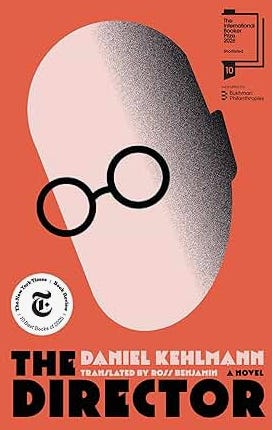
THE DIRECTOR by Thomas Kehlmann. A highly imaginative biography of Fritz Lang’s disaffection with the United States and his fateful decision to return to Germany. At turns funny, frightening and recognizable.
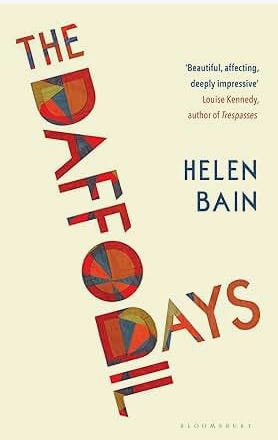
THE DAFFODIL DAYS by Helen Bain. A beautiful description of the last year in the life of Sylvia Plath which quite brilliantly escapes the cliches that have obscured the brilliance of her poetry. An extraordinary debut demonstrating what real research feels like.
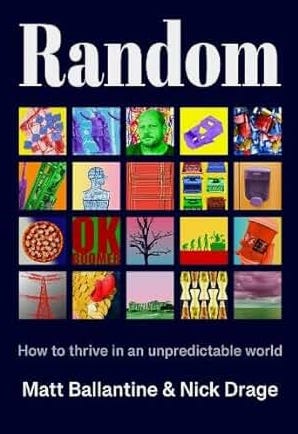
RANDOM Not so much a book as a box brimming with ideas, devised by Matt Ballantine and Nick Dragy. Few people really understand randomness but this is a brilliant introduction—though you could equally think of it as a conversation starter, a breakout session, a game or a virtual museum. (Curiously, when I searched for this, the book was the first result, followed by gym matting…random indeed!)
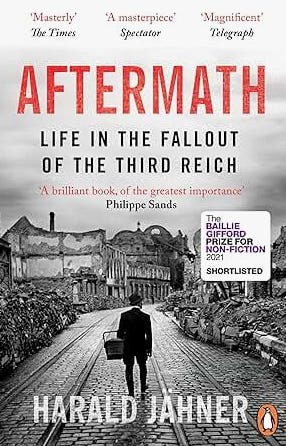
AFTERMATH by Harald Jahner. I have always wondered how, at the end of World War II, people got home, reconnected with family members and put their lives back together. What did they use for money? How did they eat? This book, by a former editor of the Berliner Zeitung, answered my questions—and many more. It is full of jaw-dropping examples of what governments can do when the need is great.
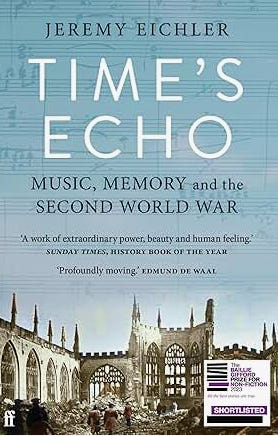
TIME’S ECHO by Jeremy Eichler. How does music carry meaning from the past into the future? It sounds like an abstract question, but Eichler has a phenomenally gripping way of answering it. Relating the lives of Shostakovich, Britten, Schoenberg, and Strauss, he finds new ways of hearing how these great composers articulated and reexamined their own lives. I find music the single hardest art form to write about—much is either too abstract or too bitchy to be of value—but Eichler finds a way to keep his subject, real, moving and inspiring.
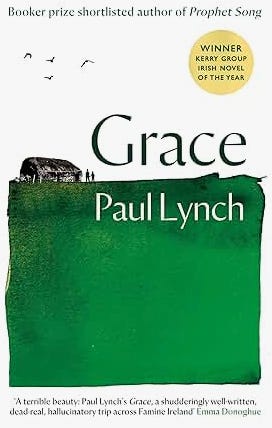
GRACE by Paul Lynch. I’m increasingly interested in the experiments with language that many emerging writers undertake. Many, at least for me, don’t work: too abstract, derivative or just annoying. GRACE is a luminous exception. Warning: this book is very, very sad. Read it anyway.
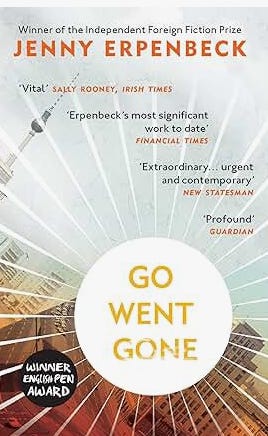
GO, WENT, GONE by Jenny Erpenbeck. The single best thing I have read on the subject of immigration by one of the finest writers in Europe today. Eye-opening and chastening in equal measure.
…and now the not-necessarily-fun-but-necessary category: two books on AI that, alone in the genre, can justly claim to be well written, highly readable, ungullible and open-minded.
WE ARE NOT MACHINES by Sarah O’Connor. The single wisest thing I’ve read about AI and the future of work. Deep thinking. Solid research. How did she do this while also writing so well for the FT?
HOW TO TALK TO AI by Jamie Bartlett, who remarkably is able to write about AI with a delightful mixture of humour, seriousness and pragmatism. I saw Bartlett do a workshop on this topic and it was a terrific exercise in thinking, evidence (if you needed it) that thinking for ourselves is key.
I’m in awe of these two writers who think so critically and pragmatically and seem to be able to do so really fast! I hope they get a break this summer too.
One small pet peeve: Neither book has an index. This is perverse cost-cutting.I typically make my own notes anyway, but both books need indexes and deserve them.

If You Want to Go Deeper
If you have access to it, buy your books from World of Books, a certified B Corp. I’ve bought my books there for years but only recently discovered that I can sell them back! This has liberated masses of bookshelf space and makes me happy that the books I’ve finished can continue to be enjoyed by others.
For the Love of It
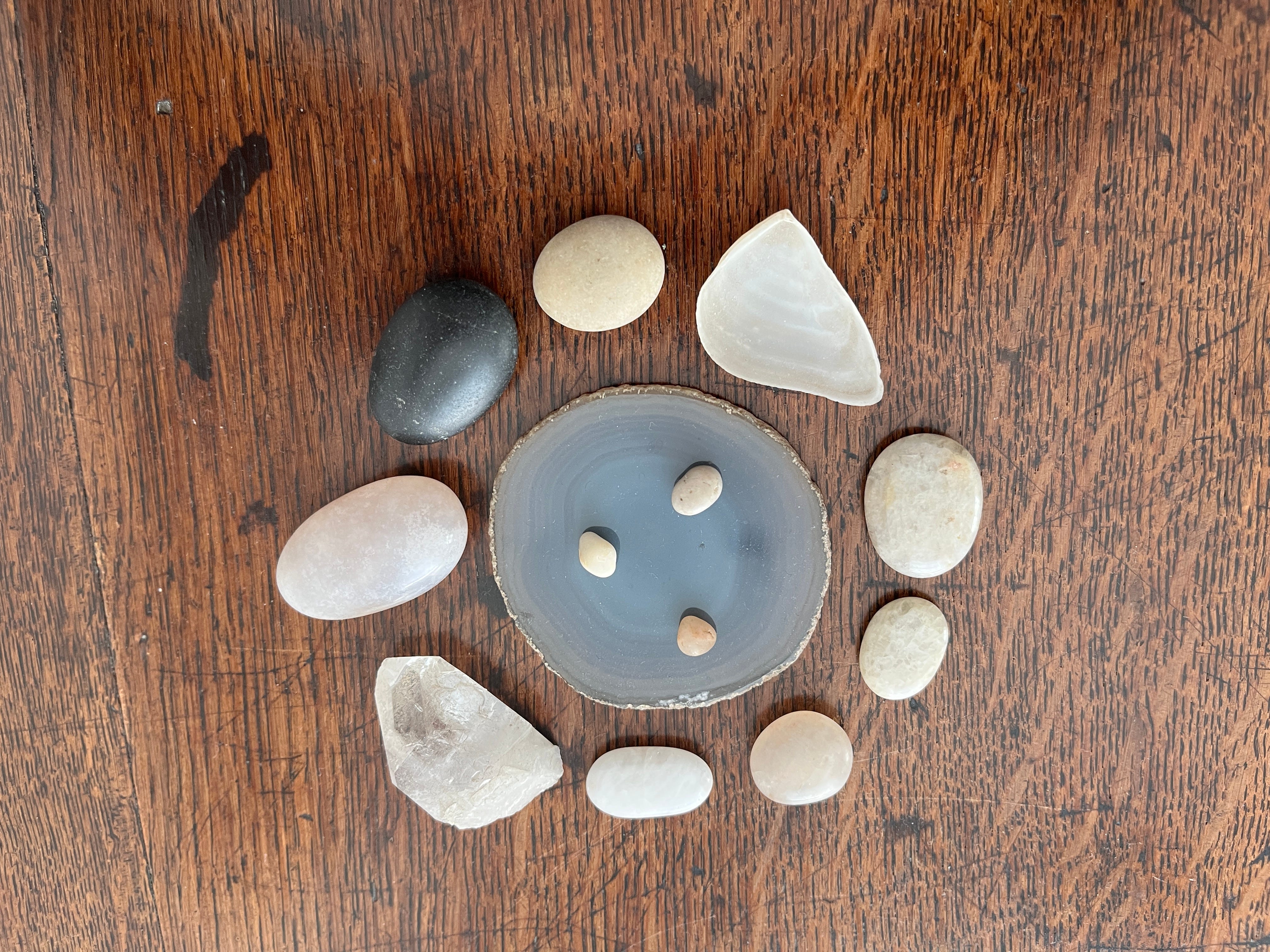
I recently visited Kettle’s Yard in Cambridge. It’s a beautiful home owned by art collectors, Jim and Helen Ede, who did much to support and advise artists they enjoyed. They gave the house, complete with their collection, to the University—and I’m ashamed to say that I never visited it during the time I lived there. Such a personal display of a lifetime’s exploration was exhilarating. Among painting by Alfred Wallis, Ben Nicholson, sculpture by Barbara Hepworth and ceramics by Lucie Rie, was an even more personal collection, which led Ede to call his house ‘a Louvre of pebbles.’ They had their own eloquence and personality.
The Daffodil Days is stunning.
The Jahner book Aftermath is excellent He has also written about Weimar. Though Frank McDonoughs book on Weimar was a must read for me.